"
إخوان مصر يتبرأون من حملة على "فيس بوك" لإعادة الخلافة الإسلامية
حبيب: لا علاقة للإخوان بالحملة
"حملة غير واقعية"
رشوان: الإخوان وراءها
موقع الحملة على الإنترنت
القاهرة - منى مدكور
تبرأ نائب المرشد العام لجماعة الإخوان المسلمين في مصر من حملة جديدة أطلقها مجموعة من الشباب المصري، على "الفيس بوك"، ويسمون أنفسهم شباب الإخوان المسلمين، ويدعون لاعتبار الثالث من مارس 2009، يوما لاستعادة الخلافة الإسلامية.
ودعا شباب الإخوان، الذين أطلقوا على أنفسهم "خلايا طلاب الإخوان الإلكترونية"، المسلمين في كافة أنحاء العالم وفي مصر، إلى العمل على إرجاع الخلافة الإسلامية من جديد من خلال التفاعل مع 5 بنود أساسية في الحملة هي: تنظيم مسيرات في كل الأقطار الإسلامية نصرة للإسلام وقضايا الأمة، ونشر حديث الخلافة، أن تكون الخلافة محور خطاب جميع الخطباء حول العالم الإسلامي، ونشر لوحات إعلانية تذكر المسلمين بخلافتهم الضائعة، مراسلو كافه الأحزاب والهيئات الإسلاميه بإحياء هذا اليوم.
وتتواكب هذه الحملة مع أخرى موازية تحت شعار "قوم يا مصري"، أطلقها أيضًا شباب الإخوان على الفيس بوك دعوا فيها المصريين، على اختلاف دياناتهم (المسلمين والمسيحيين، متدينين وغير المتدينين، للتفاعل مع الحملة للنهوض بمصلحة مصر كما تقول أهداف الحملة، كما دعوا للتبني مع شعار "عايزين مصر تبقى إسلامية" في إشارة إلى ضرورة تفرع حملات شباب الإخوان المسلمين في العمل على شبكة الإنترنت لحشد أكبر عدد من الشباب من خلال تكوين خلايا صغيرة تبرز أهم قضاياهم كما يقولون كحملات منفصلة، متصلة على أهداف محددة.
عودة للأعلى
حبيب: لا علاقة للإخوان بالحملة
وتبرأ نائب المرشد العام للجماعة الدكتور محمد حبيب من الحملة، وهاجم هؤلاء الشباب، نافيا أن يكونوا من الإخوان المسلمين من الأساس.
وقال لـ"العربية.نت" "لا أظن أن شباب الإخوان المسلمين يفعلون ذلك ولا يمكن لهم أن يفكروا بهذه الطريقة، لأن شباب الإخوان يسيرون على نفس نهج ونسق القيادة في جماعة الإخوان المسلمين ولا ينشقون عنها بأفعال فردية ليست تحت حكم وتصرف وقرار الجماعة".
ويؤكد حبيب على أن جماعة الإخوان المسلمين لا علاقة لها بهذه الحملة لشباب الإخوان، قائلا "كل من يخرج عنا، فهو ليس منا، لأن جماعة الإخوان المسلمين لها منهج أساسه الالتزام وتحكمه الضوابط المتعارف عليها، أما من أراد أن يخرج عن هذه
الضوابط التي حددتها الجماعة من خلال اتخاذه لوسيلة أخرى لا نعرف عنها شيئا فعليه ألا ينسب نفسه إلينا ولا يلزم الجماعة بما اتخذه من أفكار وخطوات هي نتاج قرار فردي أولا وأخيرا..".
وينفي حبيب أن يكون هذا الرد هو تخلي عن شباب الجماعة خوفا من أية مواجهات أمنية متوقعة مع الجماعة في المرحلة المقبلة، قائلا "نحن لا نتخلى عن أحد ولكن طالما هؤلاء الشباب لم يلتزموا منهجنا ولم يحترموا أسلوبنا في العمل فهم ليسوا منا وهم مسؤولون مسؤولية كاملة عما يفعلون ولا علاقة لنا بهم وبما يفعلون وكل يتحمل مسؤوليته".
عودة للأعلى
"حملة غير واقعية"
بدوره، تحفظ عضو مجلس الشعب عن جماعة الإخوان المسلمين الدكتور حمدي حسن على هذه الدعوات، التي وصفها باختلاف وجهات النظر والتطبيق في طريقة عمل الجماعة من الشباب، وأن الأمر في النهاية مجرد تحرك غير واقعي.
لكن حمدي تدارك الأمر حينما سئل عمَّا إذا كان هناك انشقاقا داخليا في صفوف الإخوان المسلمين تبعها تمرد من الجيل الثالث على شيوخ الجماعة، وقال "كل الآمال العظيمة تبدأ بحلم صغير، وهؤلاء شباب من حقهم أن يحلموا ولكني لا أتوقع أن يكون لها مردود على أرض الواقع، رافضا الاستشهاد بإضرابات 6 إبريل و4 مايو التي أثارت الشارع المصري وقبض على العديد من منظميها.
عودة للأعلى
رشوان: الإخوان وراءها
وأما الدكتور ضياء رشوان، الخبير الاستراتيجي في شؤون الجماعات الإسلامية، فينبه إلى أن نفي حبيب لمعرفة الجماعة بحملة "قوم يا مصري" أمر مستغرب لأن الموقع الرسمي للجماعة على شبكة الإنترنت يحوي بيانا عن الحملة، بتاريخ 4-5-2008، صادر عن الهيكل التنظيمي لطلاب الإخوان المسلمين داخل الجماعة.
وقال "لا يمكن إغفال أن يكون هناك خلافات داخل الجماعة لكنها أبدا لن تصل إلى حد الانشقاق، خاصة أن الخلافات داخل الجماعة، وتكوين أجنحة مستقلة عن بعضها البعض طوال الوقت، لم يخلف أبدا في تاريخ الإخوان طوال 4 أجيال منذ 80 عاما أي انشقاقات جوهرية، فهم حريصون تماما على وحدتهم حتى في أحلك الظروف".
وأشار إلى أنه "من الطبيعي أن تحدث احتكاكات ما بين الأجيال المختلفة داخل الجماعة وهذا أمر معروف، ولكن على سبيل المثال أشهر شباب الإخوان المسلمين وهو عبد المنعم محمود يعنون مدونته بـ"أنا إخوان" على الرغم من هجومه على قيادات الإخوان الحاليين واختلافه معهم في كثير من الأمور، لكنه في النهاية لم ينفصل أو يتبرأ منهم.
وأضاف "إن حملة شباب الإخوان تأتي فعلا أقرب إلى حلم بعيد المنال وغير واقعية، خاصة أن كبار قادة الإخوان المسلمين على مر تاريخهم لم يجعلوا الخلافة الإسلامية هدفا يسعون إليه اللهم إلا هدفا لتجميعهم وليس لإحيائها، وهي طريقة تفكير لشباب عديم الخبرة لا يدرك تماما حجم التحولات الدولية وكيف نشأت الخلافة ولا لماذا انتهت، لكنهم جعلوا الخلافة الإسلامية هدفا للحملة كتنفيس عن الغضب المكتوم في صدروهم تجاه الاضطهاد الذي يتعرض لها المسلمون، خاصة بعد أحداث الـ11 من سبتمبر وإلحاق تهمة الإرهاب بكل ما هو مسلم"
Friday, July 25, 2008

Friday, July 11, 2008
NPR.org - Young Moroccans Bypass Mainstream Media : NPR
NPR.org - Young Moroccans Bypass Mainstream Media : NPR
فزع إعلامي لعزم مصر مراقبة الفضائيات والإنترنت
| فزع إعلامي لعزم مصر مراقبة الفضائيات والإنترنت |
 |
| وزراء الإعلام العرب خلال مناقشتهم لوثيفة البث الفضائي (الجزيرة-أرشيف) |
الجزيرة نت-القاهرة
أثار الكشف عن مشروع قانون أعدته وزارة الإعلام المصرية لتنظيم البث الفضائي ومراقبة الإنترنت، فزعا وهلعا لدى الإعلاميين والحقوقيين الذين وصفوا القانون بـ"البوليسي"، وسط مطالبات لنواب البرلمان بعدم تمريره.
ويتضمن مشروع القانون الذي نشرته صحيفة "المصري اليوم" إنشاء جهاز للرقابة يترأسه وزير الإعلام وعضوية ممثلين عن هيئة الأمن القومي ووزارات الداخلية والخارجية والثفاقة، مهمته مراقبة مضمون ومحتوى جميع وسائل البث من محطات تلفزيونية وإذاعات ومواقع الإنترنت، بما فيها الفيس بوك.
رئيس تحرير جريد البديل الدكتور محمد السيد سعيد أعرب للجزيرة نت عن خشيته من أن يطال القانون المواقع الإلكترونية للصحف "بالتضييق أو الحظر" في محاولة للضغط على الجرائد المطبوعة "التي يرى الأمن أنها تعارض النظام".
وقال إن الوضع السياسي يتجه لتقليص حرية التعبير وضرب التجمعات ذات الأفق السياسي في الفضاء الإلكتروني، معتبرا أن هدف القانون "إثارة ثقافة الخوف والملاحقة الأمنية للمعارضين والنشطاء الحقوقيين".
وأضاف سعيد أن الحكومة تشن حربا إلكترونية وفضائية على القنوات الجادة والمواقع الإلكترونية النشطة، وتوقع أن تشهد الفترة القادمة حالات "كر وفر إلكتروني". وتابع "كما يمكن ضرب أي موقع بسهولة، يمكن بسهولة أكثر فتح موقع جديد".
ونص مشروع القانون على أن "إنشاء الجهاز يأتي للحد من إنتاج برامج يتم بثها مباشرة للجمهور بمحتوى يهدد النظام العام والآداب وما ينطوي على ذلك من إخلال بأمن وسلامة البلاد".
ويعاقب القانون من يخالف ما جاء فيه بالحبس مدة تصل إلى عامين والغرامة أو بإحدى العقوبتين. وجعل مشروع القانون عقوبة الحبس لازمة في حالة تكرار المخالفة، كما يجوز إنذار المخالف ووقف أو سحب الترخيص أو التصريح.
دور الشرطة
ورأى المدير التنفيذي للشبكة العربية لمعلومات حقوق الإنسان جمال عيد أن واضعي القانون هم "رجال شرطة ومباحث وليس إعلاميين وصحفيين"، موضحا أن الحديث عن تركيز القانون على تداول مقاطع الفيديو على الإنترنت "يؤكد أن ضباط شرطة ساهموا في صياغته".
| جمال عيد "واضعو القانون هم رجال شرطة ومباحث وليس إعلاميين وصحفيين"، " |
وأشار إلى أن الإعلاميين والمثقفين لم يفاجأوا بإصدار الحكومة المصرية هذا القانون بعد أقل من ثلاثة أسابيع من الاجتماع الأخير لوزراء الإعلام العرب، "الذي استشعرت القاهرة خلاله أن موقف قطر الرافض لوثيقة البث الفضائي جذب دولا عربية إليه، فبادرت بوضع هذا القانون البوليسي الخاص بها".
عبد الجليل الشرنوبي رئيس تحرير إخوان أون لاين -الموقع الرسمي لجماعة الإخوان المسلمين- اعتبر القانون "دفنا للرؤوس في الرمال"، وقال للجزيرة نت إن ملاحقة الفضائيات والمواقع الإلكترونية "سياسة عقيمة ومظهر معتاد للأنظمة الرجعية".
ويدلل بأن حظر الحكومة لموقع الإخوان في ديسمبر/كانون الأول 2004 "لم يمنع الجماعة من التواصل مع أنصارها وجماهيرها لمدة عام كامل", وقال "إذا أغلقوا موقعا يعمل من القاهرة، فيمكن إعادة تشغيله من خارج مصر خلال ساعة واحدة".
Tuesday, June 24, 2008
تقييد الإعلام الإلكتروني يكمل مثلث الرقابة العربية
| تقييد الإعلام الإلكتروني يكمل مثلث الرقابة العربية |
 |
| متصفح إنترنت بجناح جامعة الأمم المتحدة بقمة مجتمع المعلومات بتونس (الفرنسية-أرشيف) |
محمود جمعة-القاهرة
أدانت الشبكة العربية لمعلومات حقوق الإنسان في مصر ما أسمته محاولة وزراء الإعلام العرب "تقييد الإعلام الإلكتروني" بإقرارهم إنشاء اللجنة العربية للإعلام الإلكتروني، ليكملوا "مثلث الرقابة والمنع والمصادرة الذي يسعى الوزراء العرب لإنشائه لتقييد الإعلام المطبوع والإلكتروني والفضائي".
وقالت في بيان إن "على كل مستخدمي الإنترنت الاستعداد جيدا بمواقع ومدونات بديلة وبرامج تتمكن من تجاوز الرقابة كوسائل مقاومة للحجب والرقابة المتوقعين عقب بدء هذه اللجنة لعملها".
ونددت الشبكة بنتائج اجتماع مجلس وزراء الإعلام العرب الأخير الذي "أسفر عن تزايد اللجوء للتعبيرات المطاطة والمراوغة لتوصيف طبيعة وثيقة تنظيم البث الفضائي والدفع في اتجاه تطبيقها ومواءمة التشريعات المحلية لكل دولة معها رغم اعتبارها وثيقة استرشادية".
وشهد الاجتماع ضغطا شديدا من ممثلي مصر والسعودية والجزائر في اتجاه تطبيق وثيقة تنظم البث الفضائي بتعديل التشريعات المتعلقة بالإعلام في كل دولة، إلا أن تمسك دولة قطر بتحفظها وانضمام الإمارات ولبنان لها، جعل القاهرة تمسك العصا من الوسط لتصف "الوثيقة" بالاسترشادية، وإن طالبت بـ "مفوضية عربية للإعلام" تعمل على تنفيذها.
 |
| عمرو موسى لم يبد موقفا حاسما من الوثيقة(رويترز) |
وقال المدير التنفيذي للجزيرة نت إن الحكومات العربية بعد الملاحقات القضائية للصحفيين ومسؤولي الفضائيات وجدت أن ضلعا ثالثا غاب عن "خطتها الشريرة لتقييد الإعلام" وهو الإنترنت، فبادرت بإنشاء اللجنة المذكورة وجعلت مقرها السعودية.
وأضاف جمال عيد أن السعودية ومصر والجزائر وتونس "أكثر الدول التي توجه لها الانتقادات في الإعلام العربي والدولي بسبب ممارستها اللاديمقراطية، لذلك فهذه الدول تضغط باتجاه مزيد من التضييق على الحريات".
العصا من الوسط
وذكر مدير الشبكة أن الأمين العام لجامعة الدول العربية كان عليه يعلن رفضه للوثيقة، لكن تبنيه لها يوضح بجلاء أن "الجامعة العربية هي كيان هش وتابع لحكومات تعادي حرية التعبير وتعمل على تقييدها".
وتردد أن عمرو موسى رفض الوثيقة شخصيا ولم يستطع معارضتها علنا حتى لا يخرج عن الإجماع العربي, لكن عيد قال "إن هناك أمورا لا يفلح معها إمساك العصا من النصف".
واعتبر عيد الإجراءات "مؤشرا واضحا عما سيسفر عنه تطبيق الوثيقة بشكل رسمي من إغلاق ومصادرة، وتضييق على حق المواطن العربي في معرفة الحقائق ومشاهدتها بدون تزييف أو تضليل".
وتوجد بالعالم العربي 415 قناة فضائية بينها 15% تقريبا حكومية، ورغم عدم البدء في تطبيق الوثيقة رسميا، منعت من البث ثلاث فضائيات خاصة بمصر هي "الحوار، الحكمة، البركة". وأوقف المغرب نشرة الجزيرة المغاربية, وصودرت أجهزة إحدى أهم الشركات التي تقدم خدمة البث الفضائي في مصر وهي شركة القاهرة الإخبارية.
وكان المغرب نفى أن يكون قرار وقف نشرة الجزيرة سياسيا, وقال إنه "تقني محض" له علاقة بتجديد التراخيص. أما في قضية شركة القاهرة الإخبارية فقد اتهم مديرها باستيراد وحيازة معدات بلا ترخيص.
Monday, May 19, 2008
Ordinary' Arabs to retake Internet: Wikipedia founder


An explosion in Internet usage in the Middle East by "ordinary" people will show the world that the region is just like anywhere else, Wikipedia founder Jimmy Wales said on Sunday.
"Too often when people around the world reflect on the situation in the Middle East they focus on extremism and the different problems," Wales told journalists at the World Economic Forum for the Middle East.
But with current total Internet usage by one billion people set to double in the next five to 10 years, Wales said that "we're going to start hearing from ordinary people."
"And I think that ordinary people are far more moderate and far more ordinary than the unfortunately polarised views of extremes you see coming out," the founder of the popular user-generated encyclopedia said.
New Internet users are "not going to be coming online from US, Europe, Japan," but from developing countries, he said.
"Over time people will start to see the Middle East in a very different light and not see it as a basket of problems."
They will "see it as a place like any other that has strengths and weaknesses, with hundreds of millions of people just trying to make a better life."
Wikipedia is an "open-source" web site on which entries can be started or edited by anyone in the world with an Internet connection.
Saturday, April 26, 2008
Student 'Twitters' his way out of Egyptian jail
By Mallory Simon
CNN
CNN


(CNN) -- James Karl Buck helped free himself from an Egyptian jail with a one-word blog post from his cell phone.

Buck's Twitter page, with his missing translator in the background, is a running blog of updates.

2 of 3


Buck, a graduate student from the University of California-Berkeley, was in Mahalla, Egypt, covering an anti-government protest when he and his translator, Mohammed Maree, were arrested April 10.
On his way to the police station, Buck took out his cell phone and sent a message to his friends and contacts using the micro-blogging site Twitter.
The message only had one word. "Arrested."
Within seconds, colleagues in the United States and his blogger-friends in Egypt -- the same ones who had taught him the tool only a week earlier -- were alerted that he was being held.
Twitter is a social-networking blog site that allows users to send status updates, or "tweets," from cell phones, instant messaging services and Facebook in less than 140 characters.
Hossam el-Hamalawy, a Cairo-based blogger at UC-Berkeley, was one of the people who got word of Buck's arrest.
"At first I was worried about his safety," el-Hamalawy said.
Then, el-Hamalawy took to the Web and wrote regular updates in his own blog to spread the information Buck was sending by Twitter. Nobody was sure how long Buck would be able to communicate.  See Buck describe what he saw and captured on film during the protests »
Don't Miss
But Buck was able to send updates every couple of hours saying he was still detained, he had spoken to the prosecutor, he still had not been charged, and he was worried about Maree.
"Usually the first thing the police go for is the detainees' cameras and cellular phones," el-Hamalawy said. "I'm surprised they left James with his phone."
Twitter is normally used to keep groups of people connected in less urgent situations.  Watch how Twitter works »
But Biz Stone, co-founder of Twitter, said he and others knew that the service could have wide-reaching effects early on, when the San-Francisco, California-based company used it to communicate during earthquakes.
Stone said that as the service got more popular, they began to hear stories of people using Twitter during natural disasters with a focus on activism and journalism.
Buck's urgent message is proof of the value of Twitter, Stone said. Buck's entry set off a chain of events that led to his college hiring a lawyer on his behalf.
"James' case is particularly compelling to us because of the simplicity of his message -- one word, 'arrested' -- and the speed with which the whole scene played out," Stone said. "It highlights the simplicity and value of a real-time communication network that follows you wherever you go."
Initially, the Twitter message was a precaution -- something people could trace in case anything went wrong, Buck said.
"The most important thing on my mind was to let someone know where we were so that there would be some record of it ... so we couldn't [disappear]," Buck said. "As long as someone knew where we were, I felt like they couldn't do their worst [to us] because someone, at some point, would be checking in on them."
Buck began using Twitter as a way to keep up in touch with the bloggers at the heart of his project and the events going on in Egypt that he intended to cover. Buck was working on a multimedia project on Egypt's "new leftists and the blogosphere" as part of his master's degree thesis.
Buck found out from a Twitter message that a planned protest against rising food prices and decreasing wages in Mahalla had been shut down by Egyptian authorities April 6.
The next day, tensions rose as family and friends of protesters who had been detained took to the streets, eventually throwing Molotov cocktails and setting tires on fire, he said.
On April 10, Buck returned to Mahalla, where protests continued.
"I was worried about getting arrested, so I made sure to stay at a distance from the protest so there was no way I could be accused of being part of it," Buck said. "Mohammed and I had a bad sense; it was really tense."
When the men tried to escape, they were detained. That's when Buck thought of Twitter and sent out his message.
Buck and Maree were interrogated, released and then detained again by the same police officers.
"We are really worried that we are off the radar now," Buck said.
Eventually Buck was released, but Maree was transferred to another police station.
As he left the station, Buck reached into his pocket, as he did less than 24 hours earlier.
Another one-word blog entry said it all: "Free."
As happy as he was to be free, Buck said, his biggest frustration was leaving behind the translator who helped protect him during the riots.
Although the Twitter message helped him find contacts to get out of prison, he says it was more the power of the network he had as an American that enabled him to be released so quickly.
"Mohammed was sitting next to me," he said. "But he didn't have the network to call. I tried to use my network to shield him until they tore us apart."
Twitter may not have been able to secure Maree's release, but Buck hopes his initial reason for using Twitter will help find his missing friend.
"It was my big hope that people would get [the message] right away and at least put a thumbtack on the map as far as our location," Buck said.
There has been no official confirmation regarding Maree's whereabouts.
Attiya Shakran, press counsel for the Egyptian Consulate in San Francisco, said Maree was released April 13.
Maree's brother Ahmed Maree said that he had not heard from his brother and that he believes he is still in jail.
Government officials in Egypt could neither confirm nor deny Maree's release, despite repeated requests for comment.

Buck is now using his story and Twitter page as a way to rally people looking for answers about Maree's status. He's gone as far as publishing the phone number of the press counsel of the Egyptian Consulate in San Francisco and posting a petition for Maree's release.
For Buck, the main story is no longer about his quest for freedom from jail; it's a quest to find answers and, eventually, find his friend.
Monday, April 07, 2008
Mapping Iran’s Online Public: Politics and Culture in the Persian Blogosphere

Mapping Iran’s Online Public: Politics and Culture in the Persian Blogosphere
Published April 05, 2008
Authored by John Kelly, Bruce Etling, Internet and Democracy
Download PDFThis case study is part of a series produced by the Internet and Democracy project. The initial studies include three of the most frequently cited examples of the Internet’s influence on democracy. The first case looks at the user-generated news site, OhmyNews, and its impact on the 2002 Presidential elections in South Korea. The second documents nontraditional media and the use of cell phone technologies for information sharing and organization of protesters during Ukraine’s Orange Revolution. This third case analyzes the composition of the Iranian blogosphere and its possible impact on political and democratic processes. The objectives of these studies are to write a narrative description of the events and the technology used in each case, to draw initial conclusions about the actual impact of technology on democratic events and processes, and to identify questions for further research.
Abstract
We used computational social network mapping in combination with human and automated content analysis to analyze the Iranian blogosphere. In contrast to the conventional wisdom that Iranian bloggers are mainly young democrats critical of the regime, we found a wide range of opinions representing religious conservative points of view as well as secular and reform-minded ones, and topics ranging from politics and human rights to poetry, religion, and pop culture. Our research indicates that the Persian blogosphere is indeed a large discussion space of approximately 60,000 routinely updated blogs featuring a rich and varied mix of bloggers. Social network analysis reveals the Iranian blogosphere to be dominated by four major network formations, or poles, with identifiable sub-clusters of bloggers within those poles. We label the poles as 1) Secular/Reformist, 2) Conservative/Religious, 3) Persian Poetry and Literature, and 4) Mixed Networks. (Click here for the map image.) The secular/reformist pole contains both expatriates and Iranians involved in a dialog about Iranian politics, among many other issues. The conservative/religious pole contains three distinct sub-clusters, two focused principally on religious issues and one on politics and current affairs. Given the repressive political and media environment, and high profile arrests and harassment of bloggers, one might not expect to find much political contestation in the blogosphere. However, we identified a subset of the secular/reformist pole focused intently on politics and current affairs and comprised mainly of bloggers living inside Iran, which is linked in contentious dialog with the conservative political sub-cluster. Surprisingly, a minority of bloggers in the secular/reformist pole appear to blog anonymously, even in the more politically-oriented part of it; instead, it is more common for bloggers in the religious/conservative pole to blog anonymously. Blocking of blogs by the government is less pervasive than we had assumed. Most of the blogosphere network is visible inside Iran, although the most frequently blocked blogs are clearly those in the secular/reformist pole. Given the repressive media environment in Iran today, blogs may represent the most open public communications platform for political discourse. The peer-to-peer architecture of the blogosphere is more resistant to capture or control by the state than the older, hub and spoke architecture of the mass media model.
| Attachment | Size |
|---|---|
| Iran_blogosphere_map.jpg | 617.4 KB |
| Kelly&Etling_Mapping_Irans_Online_Public_2008.pdf | 1.77 MB |
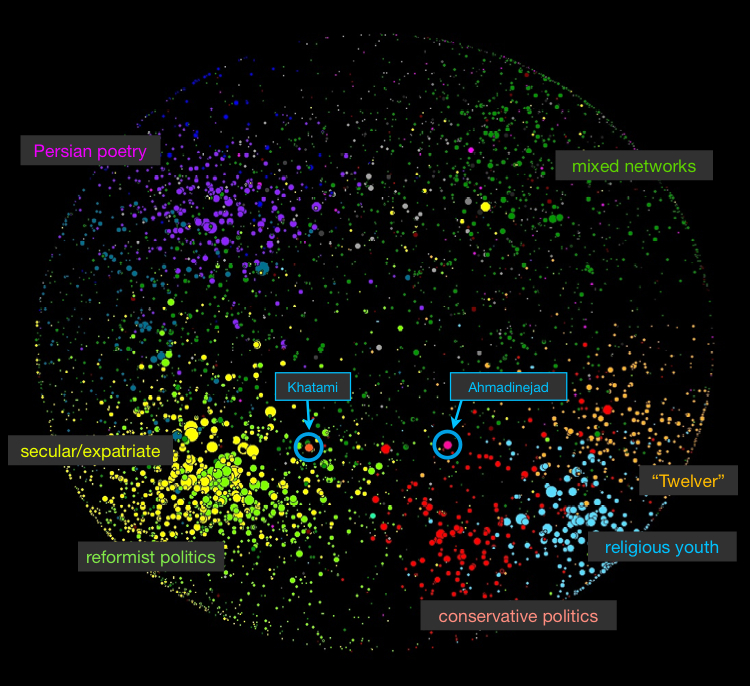
Friday, March 14, 2008
تم اقتحام منزله بعد اعتقال مسؤول الموقع الإنجليزي للجماعة
 | |
 | |
| عبد الجليل الشرنوبي |  |
القاهرة- العربية.نت
يأتي هذا في الوقت الذي يظل الإعلامي خالد حمزة مدير تحرير موقع "إخوان ويب" –الموقع الإنجليزي لجماعة الإخوان المسلمين-رهن الاعتقال منذ العشرين من فبراير الماضي، ليصبح مديرا موقعي الإخوان ما بين معتقل ومطلوب للاعتقال.
وتكتسب الانتخابات المحلية أهميتها بسبب التعديل الدستوري للمادة 76 الخاصة بالترشح لرئاسة الجمهورية؛ حيث نصت المادة 76 على أن تزكية عدد معين من أعضاء المجالس المحلية، فضلا عن عدد آخر من أعضاء مجلس الشعب، هي شرط أساسي لقبول ترشيح أي شخص لمنصب رئيس الجمهورية، الذي سيحل موعد انتخابه في عام 2011.
ويشغل أعضاء في جماعة الإخوان، التي تعد أكبر جهات المعارضة في البلاد حوالي خُمس مقاعد مجلس الشعب. ويتقدم مرشحو الجماعة للانتخابات كمستقلين، تفاديا لحظر لها مستمر منذ عقود. وأرجأت الحكومة انتخابات المجالس المحلية، التي كان مقررا إجراؤها عام 2006 بعد مكاسب
Thursday, March 06, 2008
مدونون مصريون يدشنون حملة ضد الحزب الحاكم
| مدونون مصريون يدشنون حملة ضد الحزب الحاكم |
 |
| المدونات على الإنترنت باتت متنفسا للمعارضين في مصر بعد التضييق على الصحافة (الجزيرة نت) |
الجزيرة نت-القاهرة
أطلق نشطاء مصريون حملة إلكترونية ضد الحزب الوطني الحاكم, ودشنوا الدعوة إلى جمع مليون توقيع على رسالة موجهة لأعضاء الحزب تقول "نكره حزبكم وسنسقطكم في أي انتخابات".
وقال المدونون في بيان تلقت الجزيرة نت نسخة منه "نعم نحن نكره الحزب الوطني وعقابنا له سيكون بالوسائل والآليات الديمقراطية.. عقابنا له سيكون في الانتخابات.. كل الانتخابات حتى يحدث التغيير والإصلاح".
وتعد الإنترنت متنفسا للمعارضين المصريين الذين تمنعهم قوانين النشر أو الإمكانات المادية من طرح آرائهم في وسائل الإعلام التقليدية. وساهمت المدونات في كشف حالات انتهاكات حقوق إنسان وتزوير انتخابات في مصر خلال الأعوام الثلاثة المنصرمة.
وقال المدونون في بيان تلقت الجزيرة نت نسخة منه "نعم نحن نكره الحزب الوطني وعقابنا له سيكون بالوسائل والآليات الديمقراطية.. عقابنا له سيكون في الانتخابات.. كل الانتخابات حتى يحدث التغيير والإصلاح".
وتعد الإنترنت متنفسا للمعارضين المصريين الذين تمنعهم قوانين النشر أو الإمكانات المادية من طرح آرائهم في وسائل الإعلام التقليدية. وساهمت المدونات في كشف حالات انتهاكات حقوق إنسان وتزوير انتخابات في مصر خلال الأعوام الثلاثة المنصرمة.
صوت مصري
ووصف البيان المدونة الجديدة بأنها "صوت مصري صميم يعبر عن المشاركين فيه والمتضامنين معه تحت لافتة واحدة هي: لا للحزب الوطني الذي أفسد الحياة كلها في مصر وتسبب في الأزمات المتتالية التي يتعرض لها المصريون كل ثانية، وحول مصر إلى عزبة ومنظومة فاسدة".
وتتصدر الموقع الإلكتروني للمدونة صور لقادة الحزب يتقدمهم الرئيس حسني مبارك ونجله جمال الذي يتولى أمانة السياسات، أهم لجان الحزب، وبعض قيادات الحزب التي ثارت حولها شبهات فساد في قضايا امتلأت بها عناوين صحف المعارضة مثل يوسف والي وأحمد عز الملقب بـ"إمبراطور الحديد في مصر".
واعتبر المدونون أن مدونتهم "ملتقى المصلحين ضد الفاسدين الذي التقت مصالحهم في هذا الحزب"، وأضافوا أنها "تجمع للرافضين لاستمرار سيطرة حزب واحد علي مصر وعدم وجود تداول على السلطة، واستمرار السعي الحثيث للتوريث، وملتقى الراغبين في فضح الحزب وإجباره على الاستيقاظ من الوهم الذي يسيطر عليه".
مليون رسالة
ودعا البيان "الجميع، كتابا ومدونين وإعلاميين ونقابيين وعمالا وطلابا وساسة وكل أطياف الشعب المصري الحر إلى تدشين حملة المليون رسالة إلكترونية أو مكتوبة أو عبر الهاتف المحمول إلى قيادات الحزب وأعضائه البارزين تحتوي على عبارة: نحن نكره حزبكم وسنسقطكم في أي انتخابات".
واختتم المدونون المشاركون في الحملة بيانهم بالقول "إنها حملة كراهية للظلم والطغيان والتزوير والاعتقالات والتدخل الأمني في الحياة السياسية والدينية والاجتماعية بل الحياة كلها، إنها حملة كراهية لكيان سرق مصر من أهلها وباعها لنفسه وللأعداء".
بارقة أمل
ووصف البيان المدونة الجديدة بأنها "صوت مصري صميم يعبر عن المشاركين فيه والمتضامنين معه تحت لافتة واحدة هي: لا للحزب الوطني الذي أفسد الحياة كلها في مصر وتسبب في الأزمات المتتالية التي يتعرض لها المصريون كل ثانية، وحول مصر إلى عزبة ومنظومة فاسدة".
وتتصدر الموقع الإلكتروني للمدونة صور لقادة الحزب يتقدمهم الرئيس حسني مبارك ونجله جمال الذي يتولى أمانة السياسات، أهم لجان الحزب، وبعض قيادات الحزب التي ثارت حولها شبهات فساد في قضايا امتلأت بها عناوين صحف المعارضة مثل يوسف والي وأحمد عز الملقب بـ"إمبراطور الحديد في مصر".
واعتبر المدونون أن مدونتهم "ملتقى المصلحين ضد الفاسدين الذي التقت مصالحهم في هذا الحزب"، وأضافوا أنها "تجمع للرافضين لاستمرار سيطرة حزب واحد علي مصر وعدم وجود تداول على السلطة، واستمرار السعي الحثيث للتوريث، وملتقى الراغبين في فضح الحزب وإجباره على الاستيقاظ من الوهم الذي يسيطر عليه".
 |
مليون رسالة
ودعا البيان "الجميع، كتابا ومدونين وإعلاميين ونقابيين وعمالا وطلابا وساسة وكل أطياف الشعب المصري الحر إلى تدشين حملة المليون رسالة إلكترونية أو مكتوبة أو عبر الهاتف المحمول إلى قيادات الحزب وأعضائه البارزين تحتوي على عبارة: نحن نكره حزبكم وسنسقطكم في أي انتخابات".
واختتم المدونون المشاركون في الحملة بيانهم بالقول "إنها حملة كراهية للظلم والطغيان والتزوير والاعتقالات والتدخل الأمني في الحياة السياسية والدينية والاجتماعية بل الحياة كلها، إنها حملة كراهية لكيان سرق مصر من أهلها وباعها لنفسه وللأعداء".
بارقة أمل
 |
| جمال فهمي أشاد بدور الشباب المصري في إحداث التغيير (الجزيرة نت) |
وفي تعليقه على المدونة قال عضو مجلس نقابة الصحفيين جمال فهمي للجزيرة نت إن ظاهرة المدونات بطبيعتها الشابة وأفكارها التحريرية والجريئة "تمثل بارقة الأمل وسط حالة اليأس العارمة التي يعيشها المصريون بسبب القبضة البوليسية للنظام الحاكم".
ورأى أن المدونات نجحت في إدخال الشباب المصري إلى الحياة السياسية بقوة في وقت عجزت فيه جميع الأحزاب السياسية عن اجتذاب هذه الشريحة الهامة. وقال "نتذكر جميعا أن المدونين الشباب كانوا أفضل من قدم تغطية لكافة الأحداث التي رافقت حالة الحراك السياسي في مصر خلال الأعوام القليلة الماضية".
وأعرب فهمي عن ثقته بقدرة الحملة التي أطلقها المدونون على جمع مليون توقيع ورسالة تؤكد رفضهم لممارسات الحزب الوطني، لكنه قال في الوقت نفسه إن هذا الأمر لن يفلح "لأن هذا النظام يعلم يقينا أنه مكروه ويصر على حكم البلد بطريقة السطو المسلح على الحكم".
ورأى أن المدونات نجحت في إدخال الشباب المصري إلى الحياة السياسية بقوة في وقت عجزت فيه جميع الأحزاب السياسية عن اجتذاب هذه الشريحة الهامة. وقال "نتذكر جميعا أن المدونين الشباب كانوا أفضل من قدم تغطية لكافة الأحداث التي رافقت حالة الحراك السياسي في مصر خلال الأعوام القليلة الماضية".
وأعرب فهمي عن ثقته بقدرة الحملة التي أطلقها المدونون على جمع مليون توقيع ورسالة تؤكد رفضهم لممارسات الحزب الوطني، لكنه قال في الوقت نفسه إن هذا الأمر لن يفلح "لأن هذا النظام يعلم يقينا أنه مكروه ويصر على حكم البلد بطريقة السطو المسلح على الحكم".
وتحولت المدونات الإلكترونية إلى أحد منابر الرأي في مصر وساهمت كثيرا في الجدل السياسي الدائر في البلاد، بعدما ارتفع عددها من 300 إلى أكثر من 4 آلاف خلال الأعوام الثلاثة الماضية، وتعرض بعض أصحابها للتوقيف أو السجن فترات مختلفة بسبب انتقاداتهم للنظام الحاكم.
Monday, February 25, 2008
دعوات لتشكيل تحالف بين الحقوقيين والمدوني
| دعوات لتشكيل تحالف بين الحقوقيين والمدونين |
 |
| المشاركون ناقشوا سبل توفير الحماية القانونية للمدونين (الجزيرة نت) |
محمود جمعة-القاهرة
ما هو مدى مصداقية ما يكتبه المدونون في مدوناتهم؟ وهل يمكن اعتبار ما يرد في المدونات صحافة بالمعنى المهني؟ وكيف يمكن حماية المدونيين قانونيا من الملاحقات الأمنية بالدول العربية التي فرضت قيودا متعاظمة على النشر والتعبير بعد وثيقة تنظيم البث الفضائي؟ وما هي حقيقة الاتهام الموجه إلى المؤسسات الحقوقية العربية بأنها مؤسسات نخبوية ولا تقترب من قضايا الشارع العربي؟
أسئلة ومناقشات استمرت على مدى يومين في ورشة عمل نظمتها الشبكة العربية لمعلومات حقوق الانسان بالقاهرة، وحضرها نحو ثلاثين ناشطا حقوقيا وممثلون لمنابر إعلامية إلكترونية عربية ومدونون مستقلون من عشر دول عربية منها مصر والسعودية والإمارات وسلطنة عمان والأردن.
مظلة قانونية
المتحاورون خلصوا في نهاية نقاشاتهم لعدد من التوصيات، وصفها المدير التنفيذي للشبكة العربية لمعلومات حقوق الإنسان جمال عيد بالإيجابية مثل "عمل خريطة على شبكة الإنترنت بأماكن السجون العربية التي يعتقل بها سجناء الرأي وتبادل المعلومات حولها، والتحرك الجماعي عبر الوسائط الإلكترونية لمواجهة ظاهرة الأخ الأكبر"، التي تتعامل بها الحكومات العربية مع قضايا حرية التعبير، والاستفادة مما يرد على المدونات من أخبار ذات مصداقية باعتبار أن المدونيين يمكن أن يصبحوا مصدرا مستقلا للأخبار.
وأشار عيد في حديثه للجزيرة نت، إلى أن الورشة خلصت إلى ضرورة حث منظمات حقوق الإنسان، للاستفادة من خبرة استخدام الإنترنت بفاعلية والتواصل مع المدونين وتوفير غطاء قانوني أو مظلة حماية لهؤلاء المدونين في مواجهة الهجمة الحكومية على الفضائيات وحرية التعبير.
وقال مينا زكري مدير برامج إن الورشة شهدت نقاشا إيجابيا بشأن سبل توفير الحماية القانونية للمدونين في ظل منظومة قوانين عربية أغلبها يقمع حرية التعبير.
تدريب المدونين 
جانب من المشاركين بالندوة (الجزيرة نت)
وقال زكري للجزيرة نت إن الاعلاميين الإلكترونيين أبدوا استعدادا لتدريب المدونين المهتمين بالعمل الإخباري، على نحو مهني لإكسابهم مزيدا من المصداقية والحرفية، مشيرا إلى أن الجلسات شهدت سجالا حول ضرورة اهتمام المنظمات الحقوقية بالقضايا الشعبوية التي تهم المواطن العربي وأن تنزل إلى الشارع العربي وتقلل من توجهاتها النخبوية.
وقال مدير وحدة البحوث والتطوير بموقع إسلام أون لاين وسام فؤاد إن المنصة التي يلتقي عليها التيار الحقوقي وتيار الإعلام الإلكتروني هي منصة التدوين، مطالبا بضرورة المراجعة الذاتية واختبار الحرفية والمهنية في الأداء فيما بين المدونيين دون أن يمر ذلك عبر آلية الضبط الحكومي.
وشدد في حديثه للجزيرة نت على ضرورة أن تترك خبرة التدوين لتتطور في إطار أهلي بعيدا عن محاولات القسر الحكومي، ودعا من سماهم بيوت الخبرة الإعلامية ذات الميول الأهلية للمشاركة في عملية تطوير التدوين بما يكفل الحفاظ على روح الذاتية والموضوعية.
واقترح خلق "مجتمع إلكتروني أهلي" يستند إلى ميثاق شرف ذاتي تكفل له نقاشات الأعضاء احترام المصداقية، بحيث يمكن أن يصبح المدونون مصادر إخبارية مستقلة في المستقبل القريب.
وبشأن خطورة حدوث اختراق أمني عن طرق المدونين، قال فؤاد إن عملية "التشبيك" أي الترابط والتفاعل القوي بين المدونين كفيل بمنع حدوث أي اختراقات أمنية على النحو الموجود في علاقة التنظيمات السياسية بالسلطات.
يشار إلى أن ممثلين لمؤسسات إعلامية عربية شاركت في الورشة منها موقع الجزيرة نت، والعربية نت، ومحيط، ونسيج، وإسلام أون لاين.
Saturday, January 12, 2008
"Aujourd'hui, la conversation importe plus que l'information"
Loïc Le Meur:
"Aujourd'hui, la conversation importe plus que l'information"
Le magazine des blogs et du Web au Maroc
Maroc Blog Awards
Les blogs marocains s’illustrent depuis plusieurs années par leur richesse et leur nombre en constante croissance. Quoi de plus naturel que d’offrir à leurs auteurs leur première consécration nationale à travers le Maroc Blog Awards ? Lire la suite
-
Comment se déroule la compétition
La période des nominations ainsi que des votes s’étalera le long du mois de décembre et de janvier. Une soirée de remise des prix clôturera l’évènement à Casablanca au début du mois de février, offrant à la communauté des blogueurs marocains un évènement qui leur fera honneur. Lire la suite
-
Les catégories des Awards
- Meilleur Blog Marocain 2008
- Meilleur Ecrit
- Meilleur Blog Rookie
- Meilleur Blog Ado
- Meilleur Blog Solidaire
- Meilleur Blog Collaboratif
- Meilleur Blog Thématique
- Meilleur Blog Politique
- Meilleur Blog IT
- Meilleur Blog Linguistique
- Meilleur Blog en Arabe
- Meilleur Design de Blog
- Meilleur Photoblog
- Meilleur Blog Musique
- Meilleur Blog Artistique
- Meilleur Blog Humoristique
- Meilleur Podcast
Dernier billet du Blog - Notre rencontre avec Google
Eh oui, vous avez bien lu. Nous avons rencontré Google ! Ou plutôt des représentants de Google, et plus précisément :
- M. Othman Laraki : Product Manager de “Google Gears” et “Google Toolbar” (California) ;
- M. Kannan Pashupathy : Director - International Operations (California) ;
- M. Mario Queiroz : Vice President - Product Manager (London) ;
Ainsi que M. Jeffrey Roth : Senior Manager (Israel) ;
Nous n’étions pas seuls, puisqu’on était accompagnés de quelques blogueurs de renom représentant ainsi la diversité de la blogosphère marocaine.
Etaient présent, Oussama Benjelloun et son double schizophrène Hamida, Othmane Boumâalif, Citoyen Hmida ainsi que l’équipe du Blogotour composé de Zed, Ahmed et Younes (malheureusement Mehdi n’as pas pu venir car il était malade, nous lui souhaitons un bon rétablissement).
Cette rencontre a pris la forme d’un dîner organisé par la famille de M. Othman Laraki qui nous a réservé un accueil magistral et que nous remercions au passage pour leur hospitalité.
Le but du dîner était d’offrir à Google un aperçu du Net marocain et de l’ambiance qui y règne afin de mieux les aider à le comprendre et à améliorer leurs services en fonctions de nos spécificités culturelles et nos habitudes d’utilisation.
Nous leur avons donc donnés nos avis sur chacun de leurs services et signalé le non fonctionnement de deux d’entre eux : “Google Earth” et “Google Maps“.
Tout s’est passé dans un cadre chaleureux et on a été agréablement surpris par la disponibilité et la convivialité des gens de Google.
Après des heures et des heures de discussions très instructives pour les deux cotés, nous avons été arrachés de nos fauteuils pour dîner tellement les sujets abordés étaient captivant et intéressants.
Après un dîner digne des rois, nos hôtes se sont joints à nous pour participer à une petite séance photo, clôturant ainsi une soirée mémorable que l’on aurait aimé durer indéfiniment.

Saudi bloggers demand freedom for famous colleague
Saudi bloggers demand freedom for famous colleague
DUBAI (AFP) — Saudi bloggers are campaigning for the release of their most famous colleague, arrested last month after slamming religious extremism and demanding political reforms in the ultra-conservative Muslim kingdom.
Family and friends remain in the dark about where Fouad al-Farhan is being held and the charges against him since he was detained on December 10 by security agents at his office in the Red Sea city of Jeddah.
A smiling Farhan (which means joyful in Arabic) declares on his blog (www.alfarhan.org) that he is pursuing "freedom, dignity, justice, equality, shura (consultation) and other missing Islamic values."
He also says his endeavours are for Raghad and Khattab -- his 10-year-old daughter and five-year-old son.
Farhan's arrest was reported on Tuesday by the English-language daily Arab News, the only Saudi newspaper to have spoken about his detention.
Farhan was being held for "interrogation for violating non-security regulations," interior ministry spokesman General Mansur al-Turki told the daily.
Arab News columnist Abeer Mishkhas wrote on Thursday that this implies that Farhan's website might not be the cause of his arrest, an assumption supported by the fact that the site has not been blocked by authorities.
But she said his detention has unnerved local bloggers, for whom the blogosphere "was a breath of fresh air," offering "freedom and an unrestricted space for all voices."
"This sense of freedom is now at risk. According to some Saudi bloggers, Farhan's arrest is making them think twice before posting comments that they might get in trouble for," Mishkhas wrote.
Two weeks before his arrest, Farhan had written to friends that he expected such a move for his writings about a group of nine reformists arrested in February 2007, eight of whom remain held without trial for alleged links to terror funding.
According to the message, Farhan said he had been asked to cooperate and apologise, but that he was not sure what he was supposed to apologise for.
"Apologising because I said the government lied when it accused the reformists of supporting terrorism," he asked in the message, which was posted last week by a committee of supporters on "Free Fouad," an Internet site on which hundreds of Saudi and foreign bloggers have been demanding Farhan's release.
Calls for his release have also come from several Arab and international media rights groups, including the Arabic Network for Human Rights Information (HRInfo), Reporters Without Borders (RSF) and the Committee to Protect Journalists.
Farhan, who wrote under his real name, recently criticised 10 influential Saudi figures, including billionaire Prince Al-Walid bin Talal and judiciary chief Sheikh Saleh al-Luhaidan.
In an article titled "No to terrorism, yes to dialogue in Saudi Arabia," and posted on December 3 following the announcement that more than 200 suspected Al-Qaeda militants had been arrested, he wrote that Al-Qaeda had not been eliminated despite the calm prevailing in the oil-rich kingdom.
He also slammed "the rejection of peaceful dialogue within Saudi society."
"When you are born and raised (in a society) marked by a discourse that excludes the other ... your spirit will be a fertile ground for the ideology of violence. When a youth grows up (in an environment) that rejects the other, he will be an easy prey and a tool for advocates of violence," said Farhan, who repeatedly targeted religious extremism.
Morocco, where bloggers can write about anything...almost
Morocco, where bloggers can write about anything...almost
RABAT (AFP) — It may be a far cry from the millions of blogs active in the West, but Morocco's blogosphere has taken off as the liveliest free-speech zone in largely conservative Muslim North Africa.
The Moroccan "Blogoma", as it is called, is home to at least 30,000 sites.
Inspired by bloggers elsewhere in the Arab world, Moroccans quickly saw these personal websites as a way to circumvent censorship while debating taboo or touchy subjects -- like the monarchy, Islam or the disputed Western Sahara.
"It is a genuine revolution because everyone can comment freely on such sensitive topics," said veteran blogger Larbi El Hilali, who set up Larbi.org.
His more than 450 posts since his blog began in late 2004 have encouraged 18,000 replies. He now gets 3,500 visitors per day, with much discussion on the constitution -- which some feel gives too much power to the king, and press freedom -- in a country where journalists have been slammed with fines or suspended sentences for "defamation against Islam and the monarchy".
Though Morocco's own national press union SNPM concedes that press freedom has improved, it and global watchdogs say there are still attempts to gag the media.
But El Hilali's blog has found that "opinions are sharply divided and many people defend the status quo," he said.
"The Blogoma is like a friendly cafe," said Mehdi7, whose site weaves light-hearted news and "gossip" from the sidelines of royal visits with more serious reports on prostitution and cannabis cultivation -- which the government is trying to eradicate to end a flourishing illegal drug trade.
Morocco today counts 30,000 blogs for four million Internet subscribers. "That's not much compared to the 1.7 million blogs in France but it's a lot more than in our neighbors," El Hilali said.
Algeria, next door, has five times fewer, according to DZblog.com, the Algerian umbrella which has counted 5,892 blogs, two million visitors and seven million page impressions since January 2006.
Tunisia is barely breaking the thousand threshold.
Blogs in Tunisia and Egypt are more akin to citizen journalism sites, but with fewer residents online they draw less attention than in Morocco. About 1.6 million Tunisians surf the web while in Egypt they number only one in 10.
User-generated web technology, however, is making an impact in the region. Wael Abbas, a 33-year-old Egyptian blogger, was decorated in November by the Washington-based International Centre for Journalists after his site was credited with getting two policemen accused of torture sentenced to three-year prison terms.
But blogs in North Africa are not without risk. Karim Amer, 22, landed four years' detention last year on charges of criticising Egyptian President Hosni Mubarak and Islam on his blog, Al Azhar.
And in 2002, Tunisian blogger Zouhair Yahyaoui was given a two-year sentence on charges of "publishing false information" about alleged human rights violations but released on bail a year later after three hunger strikes. He has since died.
Mehdi7 contends that "Morocco is a country where you can still run a good blog.
"I've not yet heard of a blog that has been censored in Morocco, in which case the whole blogosphere here would mobilise," he said.
Global Voices Advocacy, however, a non-governmental agency that fights against censorship on the web, highlighted 17 countries on its "Access Denied Map", seven of which were Arab states including Morocco.
In May, Rabat blocked access to the video sharing website YouTube for six days after it aired videos considered insulting to King Mohammed VI. In June, Live Journal, an overseas platform hosting two million blogs, was also shut down internally after airing material seen as backing Polisario Front rebels, who are fighting Moroccan forces in the Western Sahara.
"The authorities end up looking ridiculous if they believe they can impose censorship on sites because anyone can get round these obstacles," said Citoyen Hmida, the prolific "doyen" of Morocco's Blogoma.
Arab bloggers -- whose language varies from Arabic to English, French and local dialects -- have sought to uphold independence from the powers that be. In the Muslim-ruled Gulf monarchy of Bahrain, for instance, the blogging community resolutely backed three chat forum moderators arrested in 2005, openly announcing the time and place of demonstrations in their support.
In Morocco, "certain political groups have tried to infiltrate the Blogoma but it has shown a remarkable capacity for self-preservation," said Moroccan web consultant Othmane Boummalif.
"These blogs are like taking a regular temperature, distinct and localised, of the daily reality," said Mehdi7.
Thursday, December 20, 2007
وصار العالم يتفرج على مصائبنا ويرى أغور ما في جراحنا في "اليوتوب"
 | |
| |
حسن الأشرف ـ الرباط
Saturday, November 03, 2007
Young US voters may get scoop in 2008
| By Laura Smith-Spark BBC News, Washington |

 Students have joined forces to launch an online national news site
With a year to go before the 2008 US presidential elections, young Americans are poised to mark their growing engagement in politics with an ambitious online news site.
The creators of Scoop08.com, which launches on 4 November, say it will be the first to harness the power of students across the US to follow the campaign.
"We noticed there was a void when it came to national, grassroots, student journalism that really could have an impact on issues of importance," said co-founder Alexander Heffner, 17.
Whether the venture sky-rockets or fizzles, its very existence reflects a social shift that candidates and major parties ignore at their peril.
Namely, America's young voters, traditionally seen as apathetic, are becoming more active voters - and there are more and more of them.
'More involved'
People aged 18-29 will make up 25% of the electorate in 2008, according to the University of Maryland's Center for Information and Research on Civic Learning and Engagement (Circle), up from 21% in 2006.
They may account for a full third of the electorate by 2015, Circle predicts, although not all will register to vote. 
 For a long time, campaigns have ignored the youth vote - but in 2004 they started to take notice
Kat Barr
Rock the Vote
Added to this, in the 2004 presidential and 2006 mid-term elections, participation among those aged under 25 - though still lower than that of older voters - rose faster than in the population as a whole.
Put into numbers, this meant 4.3m more under-30 voters turned out in 2004 than in 2000, while 1.6m more under-30s voted in 2006 than in 2002, says Rock the Vote, a non-partisan organisation that aims to educate and mobilise young voters.
Kat Barr, Rock the Vote's director of research and education, says it appears to be a continuing trend.
"We have seen through polling, through volunteerism rates, all kinds of indicators... that 18- to 29-year-olds are far more involved in politics than their older brothers and sisters," she said.
 Young voters may have helped Democrat Jim Webb to victory
"For a long time, campaigns have ignored the youth vote - but in 2004 they started to take notice and in 2006 we did see some campaigns target youth votes."
Rock the Vote's research suggests that the increased youth vote played into the results in several tight races in 2006, including Democratic senate gains in Montana and Virginia.
Those results flag up another reason why neither party can afford to ignore the youth vote: its apparent shift to the left.
A Pew Research Survey in 2006 found that 58% of young voters identified themselves as Democrats and 36% as Republicans.
A survey of the same demographic in 1991 found that 55% of young voters saw themselves as Republican.
Networking
So what are the issues motivating this newly energised young generation?
Rock the Vote polling and focus groups put the Iraq war as young voters' number one concern, followed by economic issues such as the cost of college and healthcare.
 A continued US troop presence in Iraq could motivate young voters
Next - and this is where differences can be seen with older age groups, says Ms Barr - come concerns about the environment, global warming and immigration.
Thomas Patterson, of the John F Kennedy School of Government at Harvard University, says the Iraq war played a big part in stirring up the youth vote in 2004 - and could do so again if the Bush administration decides to "stay the course" in Iraq.
Young voters have also warmed to changes in the presidential debate format, with 77% saying they preferred to see questions put by members of the public, as happened in July's video-based YouTube debate, compared to 57% of those aged 65 and older.
Developments such as the use of social networking sites, including Facebook and MySpace, in campaigning have also been embraced by younger voters.
'Moment in history'
These innovations are in the armoury of Scoop08 as it prepares to compete with the mainstream media, said Mr Heffner and co-founder Andrew Mangino, a 20-year-old Yale student.
 Less prominent candidates like Dennis Kucinich may get more coverage
They plan to use video clips, blogs and podcasts on the site, as well as more conventional reports, to draw in a younger audience.
"There is an increasingly politically engaged generation that is able to network online and to work professionally, academically and socially in this venue," said Mr Heffner.
Among the beats to be awarded to its 300-plus stable of reporters are "rhetoric" - where presidential candidates' campaign speeches will be unpicked - "democracy" and "ethics".
The site also intends to shed light on under-reported issues and the less-known presidential candidates, drawing on its geographically, ethnically and socially diverse team to do so.
Of course, the whole enterprise relies on the commitment of student reporters and editors who will be working for nothing, supported by an advisory board that includes established journalists and former presidential candidate Gary Hart.
Will the young volunteers' energy last through the year to polling day on 4 November 2008?
Mr Mangino is optimistic. "Everyone is just so committed to this," he said. "They will increasingly devote their time just because it is that moment in history where it is possible."Monday, September 24, 2007
صحفيو الأردن يرفضون مراقبة الحكومة صحافة الإنترنت

صحفيو الأردن يرفضون مراقبة الحكومة صحافة الإنترنت
صحفيون أردنيون يحتجون على إجراءات الحكومة التي تطال حرية الكلمة (الجزيرة نت)
محمد النجار-عمان
أثار قرار الحكومة الأردنية إخضاع المواقع الإلكترونية الإخبارية لرقابة قانون المطبوعات والنشر غضبا في الشارع الصحفي الأردني، ففي حين رأى إعلاميون أن هدف هذا الإخضاع هو الحد من سقف الحرية المرتفع على صفحات هذه المواقع، نفت الحكومة وجود أي نية لاستهداف الحريات الصحفية.
وعلى الرغم من أن صحافة الإنترنت حديثة العهد في المملكة، فإن المواقع الإخبارية الأردنية باتت تأخذ حيزا واسعا من اهتمام الشارع الأردني لا سيما مع تصديها لنشر أخبار وقضايا لا تجد طريقها للصحف المطبوعة، وما يعقب ذلك من تفاعل وجدل بين المعلقين.
قيود جديدة
نقيب الصحفيين الأردنيين طارق المومني استغرب القرار الحكومي "الرقابة على المواقع الإلكترونية في عصر السماوات المفتوحة"، وقال للجزيرة نت إن "اعتبار الصحف الإلكترونية خاضعة لقانون المطبوعات ليس سوى محاولة لفرض المزيد من القيود الجديدة من خلال الرقابة على وسائل الإعلام".
وتتبع الصحف الإلكترونية الأردنية لمؤسسات أسسها إعلاميون أردنيون حديثا، وتحولت لمنبر لكثير من الكتاب الممنوعين من الصحف اليومية والمقالات التي تمنع من النشر وتطرح قضايا مثيرة للجدل لا يجدها المهتمون في الصحف المطبوعة.
المومني استغرب القرار الحكومي (الجزيرة نت)
ولفت المومني إلى أن مثل هذه الرقابة "تضر بالصورة الكلية للأردن".
وعبر رئيس تحرير صحيفة عمون الإلكترونية سمير الحياري عن دهشته للقرار الحكومي، محملا رئيس الوزراء الأردني المسؤولية عن القرار الذي اعتبر أنه "يضاف لسلسلة الإخفاقات في مسيرة الحكومة الحالية".
الحياري قال للجزيرة نت "كيف ستجلس دولة على ركبة ونصف لتراقب آلاف المواقع والمدونات وكل رأي أو مقال يكتبه الأردنيون في المواقع الأردنية وغيرها؟"، ورأى أن القرار جاء بعد أن أخذت هذه الصحف في "تناول الحكومة ونقدها ونقد سياساتها وقراراتها والسماح للمواطنين والمهتمين بالإدلاء بآرائهم دون أي نوع من الرقابة".
ويتخوف إعلاميون من أن يتم تحويل كتاب وصحفيين للمحاكم على خلفية آرائهم المنتقدة بشدة للحكومات وسياساتها، مما قد يعرضهم للحبس أو تغريمهم مبالغ طائلة كما نص على ذلك قانون المطبوعات.
وقال الحياري إن صحيفته تصدر عن شركة مسجلة في الولايات المتحدة، وأضاف "توقعت أنا وشريكي أن تأتي حكومة في يوم ما وتمنع الصحيفة من الصدور من الأردن"، وتساءل "بأي حق ستخضعنا الحكومة لقانون أردني ونحن لسنا صحيفة مسجلة في الأردن؟".
الصحفيون يخشون على حرية الصحافة الإلكترونية من قرار الحكومة (الجزيرة نت)
مبررات الحكومة
لكن مدير المطبوعات والنشر مروان قطيشات نفى بشدة وجود أي نية لدى الحكومة لإحداث أي نوع من الرقابة على المواقع الإلكترونية، وقال للجزيرة نت "ما حدث فقط هو أننا حددنا مرجعية قانونية لهذه الصحف تحسبا لأي تعديات من جانبها على القانون"، معتبرا الانتقادات الموجهة للقرار "تضخيما مبالغا فيه".
وزاد "ماذا لو أن موقعا ما تهجم على الذات الإلهية أو الأديان ألا يحق لنا كحكومة أن نلجأ للقضاء الذي سيحكم في الأمر بشكل مستقل؟" نافيا وجود أي أهداف سياسية وراء القرار، وأكد أنه جاء بناء على استشارة قدمت لأعلى مرجعية قانونية أردنية وهي ديوان التشريع والرأي.
Sunday, September 23, 2007
الأردن يبدأ مراقبة المواقع الإخبارية الإلكترونية
| الأردن يبدأ مراقبة المواقع الإخبارية الإلكترونية |
 |
| |
وقال نبيل المومني مساعد مدير عام دائرة المطبوعات والنشر"كدائرة مطبوعات في ظل القانون يحق لي متابعة مضمون هذه المواقع".
وأضاف أن ديوان التشريع في رئاسة الوزراء أعطى تفسيرا للقانون يشمل فيه المواقع الإلكترونية، ولذا فان ما ينطبق على الصحف ينطبق على كل وسيلة نشر أخرى.
يذكر أن الأردن شهد في الآونة الأخيرة انتشارا للمواقع الإخبارية الإلكترونية.
ووفقا لقانون المطبوعات الذي أقرت تعديلاته في مايو/أيار الماضي فإنه يحق لأي جهة معنوية أو فردية مقاضاة الصحف أمام المحاكم النظامية، كما يحق لدائرة المطبوعات والنشر ملاحقة الصحف التي تنشر مواد مخالفة مثل إهانة الأديان أو المس بالوحدة الوطنية أو القدح والذم.
ويلغي قانون المطبوعات الجديد إيقاف الصحفيين على ذمة التحقيق وهو ما حقق أحد مطالب نقابة الصحفيين، التي كانت تطمح أيضا لنص صريح يلغي الحبس وفق القوانين الأخرى ومنها قانون العقوبات.
Sunday, September 16, 2007
Friday, September 07, 2007
Rachid Jankari on Moroccan online political electoring
Les partis politiques en course pour la campagne électorale des élections législatives 2007 au Maroc parient sur le net pour rallier davantage de voix et citoyens. Visite guidée de la dynamique politique sur le Web aussi bien des pouvoirs publics que des acteurs politiques en compétition.
Mutation. Les élections législatives 2007 marque un tournant dans l’usage des technologies de l’information par les pouvoirs publics et les partis politiques. En effet, ce rendez-vous électoral, prévu pour le 7 septembre, se caractérise par un recours intense à l’internet et le multimédia pour créer plus d’interactivité avec les électeurs.
Pour preuve, l’Etat, plus précisément le Ministère de l’intérieur, était précurseur dans ce domaine à travers la mise en place d’un site bilingue dédié aux élections (www.elections.gov.ma).
Du côté des partis politiques, les principales formations politiques n’ont pas lésiné sur les moyens pour marquer leurs territoires sur la toile. Ainsi, les principaux partis ont renforcé leurs sites web institutionnels pour mieux communiquer sur leurs programmes politiques. Il s’agit, notamment du PJD (www.pjd.ma), du l’USFP (www.usfp.ma) et de l’Istiqlal (www.istiqlal.ma).
Néanmoins, le projet web le plus innovant pour l’édition électorale 2007 est celui lancé au mois d’août par le parti du Progrès et Socialisme (PPS). Concrètement, cette formation, membre de la coalisation gouvernementale actuelle, (ex parti Communiste) a développé trois sites qui sont respectivement dédiés aux
élections législatives (www.pps2007.com), aux forums (www.forum-pps.com) et aux blogs des personnages politiques du parti (www.blogs-pps.com). Ces trois sites viennent étoffer le site officiel du parti (www.pps-maroc.com).
Le dynamisme partisan sur la toile n’est pas seulement l’apanage des formations légales en course pour les élections. Le parti islamiste non reconnu Equité et Bienfaisance (Al Adl Wal Ihssan) est considéré, aujourd’hui, comme étant le parti le plus actif sur le plan numérique, en premier lieu via son portail fédérateur des sites du mouvement www.aljamaa.net et ce même s’il ne prend pas part au jeu politique légal.
«Malgré la multiplicité des sites web et des initiatives numériques, les partis politiques sous-estiment encore le potentiel d’internet comme vecteur de mobilisation et de socialisation politique par rapport aux médias traditionnels tels que la presse écrite et l’audiovisuel », souligne, sur un ton de regret, Othmane Boumaalif, consultant spécialisé dans les TIC.
Pour Fatiha F, jeune cadre de Casablanca « certes, les partis politique et l’Etat ont mis en place des sites web, mais ces outils manquent d’interactivité. C’est plutôt des brochures institutionnelles électroniques sans interactivité ».
Même son de cloche chez Latifa N, cadre administratif dans une société high-tech « Ce que je trouve regrettable sur les sites des partis politiques c’est le manque de mise à jour et l’approche opportuniste du web dans la mesure où ces sites ne sont actualisés qu’à l’approche de échéances électorales ».
Néanmoins, l’un des signes de maturité de l’usage des TIC dans le champ politique marocain, les initiatives du tissu associatif et de la société civile. C’est le cas, à titre indicatif, du projet sur www.electionsmaroc.com financé par la fondation allemande Friederich Ebert. Ce site se veut un espace de tous les marocaines et marocains, qui se sentent citoyens, pour dire ce qu’ils attendent ou n’attendent pas des législatives de septembre 2007.
La blogosphère n’est pas en reste. Plusieurs blogs, en majorité en langue française, traitent des enjeux et des attentes de cette échéance politique majeure dans la vie publique du Royaume. C’est le cas du blog fédérateur http://maroc-blogs.com qui référence les billets thématiques sur la campagne électorale.
Enfin, le site communautaire Selwane a lancé une expérience pilote d’une Web-TV électorale (www.selwane.tv). Elle a pour vocation de faire le focus sur les actions et programmes des acteurs politiques, en premier lieu, de la ville de Salé.
Liste indicative des sites de certains partis politiques en ligne :
Le dynamisme partisan sur la toile n’est pas seulement l’apanage des formations légales en course pour les élections. Le parti islamiste non reconnu Equité et Bienfaisance (Al Adl Wal Ihssan) est considéré, aujourd’hui, comme étant le parti le plus actif sur le plan numérique, en premier lieu via son portail fédérateur des sites du mouvement www.aljamaa.net et ce même s’il ne prend pas part au jeu politique légal.
«Malgré la multiplicité des sites web et des initiatives numériques, les partis politiques sous-estiment encore le potentiel d’internet comme vecteur de mobilisation et de socialisation politique par rapport aux médias traditionnels tels que la presse écrite et l’audiovisuel », souligne, sur un ton de regret, Othmane Boumaalif, consultant spécialisé dans les TIC.
Pour Fatiha F, jeune cadre de Casablanca « certes, les partis politique et l’Etat ont mis en place des sites web, mais ces outils manquent d’interactivité. C’est plutôt des brochures institutionnelles électroniques sans interactivité ».
Même son de cloche chez Latifa N, cadre administratif dans une société high-tech « Ce que je trouve regrettable sur les sites des partis politiques c’est le manque de mise à jour et l’approche opportuniste du web dans la mesure où ces sites ne sont actualisés qu’à l’approche de échéances électorales ».
Néanmoins, l’un des signes de maturité de l’usage des TIC dans le champ politique marocain, les initiatives du tissu associatif et de la société civile. C’est le cas, à titre indicatif, du projet sur www.electionsmaroc.com financé par la fondation allemande Friederich Ebert. Ce site se veut un espace de tous les marocaines et marocains, qui se sentent citoyens, pour dire ce qu’ils attendent ou n’attendent pas des législatives de septembre 2007.
La blogosphère n’est pas en reste. Plusieurs blogs, en majorité en langue française, traitent des enjeux et des attentes de cette échéance politique majeure dans la vie publique du Royaume. C’est le cas du blog fédérateur http://maroc-blogs.com qui référence les billets thématiques sur la campagne électorale.
Enfin, le site communautaire Selwane a lancé une expérience pilote d’une Web-TV électorale (www.selwane.tv). Elle a pour vocation de faire le focus sur les actions et programmes des acteurs politiques, en premier lieu, de la ville de Salé.
Liste indicative des sites de certains partis politiques en ligne :
- Le mouvement populaire : www.harakamp.ma
- Parti Socialiste Unifié http://psu.apinc.org/
- Front des forces démocratiques www.ffd.ma
- Parti de l’environnement : www.geocities.com/ped_maroc
Subscribe to:
Posts (Atom)